

Plastic vs. Wood Pallets: 5 Reasons Plastic Pallets Are Better Than Wood
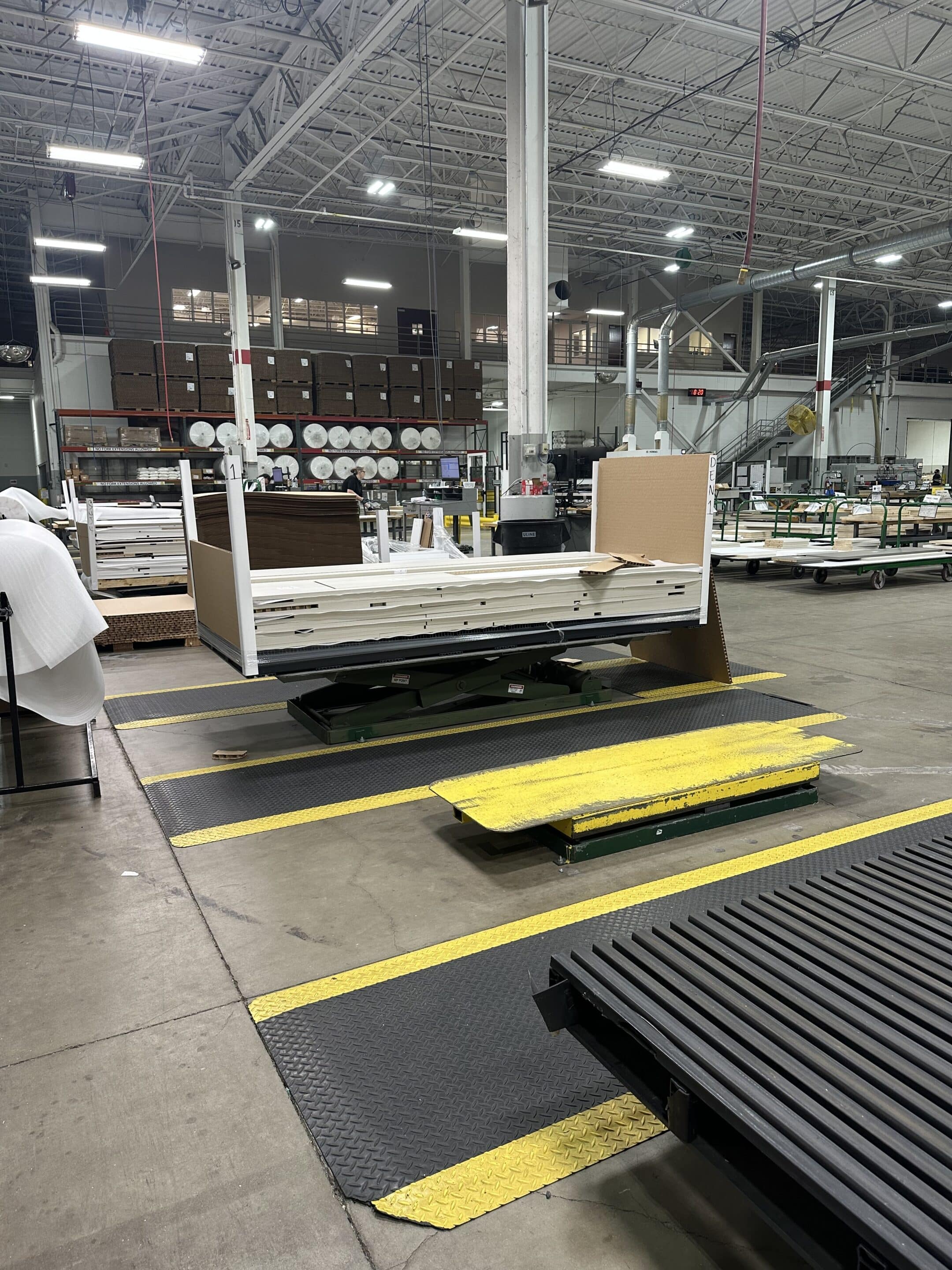
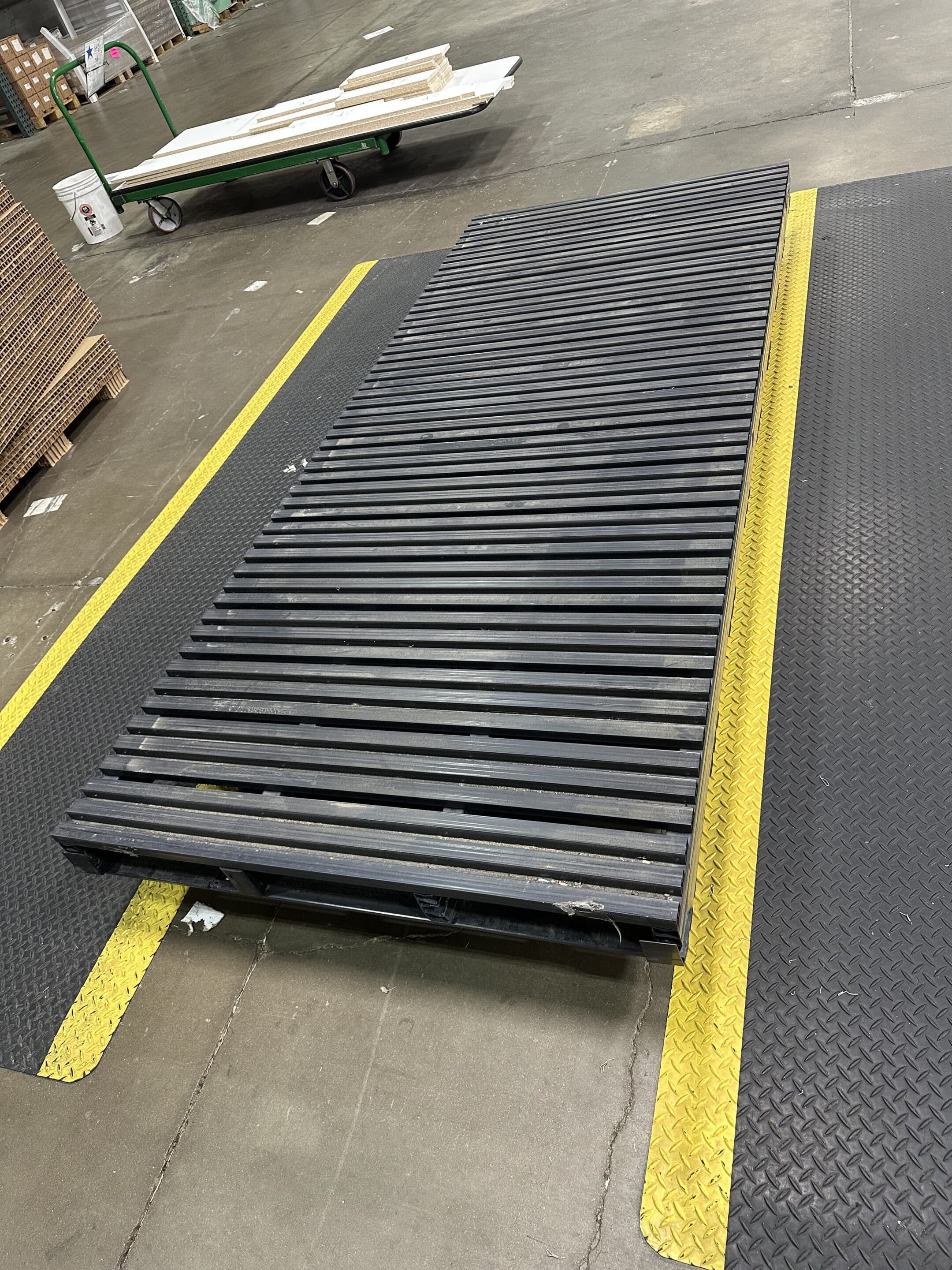
We helped California Closets save real money on pallets. Here’s how.
Before making a change, California Closets was ordering roughly 200 wood pallets every two to three weeks just to keep operations running with a recurring cost driven by a material that wasn’t built for repeated use.
That kind of purchasing pattern is common across manufacturing and distribution operations, which is exactly why it tends to go unquestioned. Wood pallets are the default, so the cost of replacing them every few weeks gets treated as a fixed cost of doing business rather than a problem with a solution. California Closets took a closer look at that assumption, and the results are the reason this case study exists.
The Problem With Wood
Wood pallets are inexpensive to buy in bulk, which is exactly why so many operations default to them. But that low upfront cost hides a longer list of operational costs. Wood warps, splinters, and absorbs moisture, which shortens usable life. Broken boards mean damaged product and pallets pulled from rotation and thrown away rather than reused. For California Closets, that meant a never-ending cycle: buy, use a handful of times, discard, reorder.
That kind of purchasing pattern is common across manufacturing and distribution operations, which is exactly why it tends to go unquestioned. Wood pallets are the default, so the cost of replacing them every few weeks gets treated as a fixed cost of doing business rather than a problem with a solution. California Closets took a closer look at that assumption, and the results are the reason this case study exists.
Engineering a Custom Plastic Pallet
Rather than offering an off-the-shelf plastic pallet, our team worked directly with California Closets to design a pallet around their actual operation. That’s the core difference between buying a generic pallet and working with a plastic pallet manufacturer that builds custom pallets: the equipment gets designed around your process, not the other way around.
We evaluated load-bearing requirements, rack compatibility, and the physical stress the pallets would face across repeated handling. A durable, impact-resistant plastic formulation was selected specifically to withstand continuous reuse rather than a single trip, with reinforcement details built in for long-term durability. The result: a heavy duty plastic pallet designed to move through California Closets’ entire operation and come back into service again and again.
From Disposable Purchases to Real Savings
This is where the savings actually happened. Instead of continuously buying wood pallets, California Closets moved to a reusable plastic pallet system – manufacturing, shipping, receiving, transfer, and return – with the same pallets cycling back through the loop instead of ending up in a dumpster.
The custom plastic pallet program reached a break-even point in approximately six months compared to continuously purchasing wood pallets. After that point, every additional cycle was pure savings, and California Closets reported pallets that could be reused more than three dozen times.
That savings showed up in more than one place: reduced purchasing frequency, lower shipping costs tied to pallet replenishment, less receiving activity, less waste, and more predictable pallet availability across facilities. What Custom Built Plastic Pallets started as a fix for one operation expanded to additional facilities once the results became clear, because the same math held true wherever the pallets were put to work.
Built for the Job, Not Just the Job Title
Recycled pallets and reused plastic pallets aren’t a novelty, they’re a legitimate industrial strategy when the pallet is engineered correctly. This isn’t the kind of pallet repurposing you’d see turned into a pallet bed frame or backyard furniture project. It’s a plastic storage pad and transport platform designed to hold up under real manufacturing loads and real supply chain demands, shift after shift. “Reusable” only pays off if the pallet is actually built to be reused – otherwise it just delays the same purchasing cycle California Closets was trying to escape.
The Takeaway
California Closets didn’t just swap one material for another – they rethought their entire pallet lifecycle, moving from a disposable, high-maintenance wood pallet cycle to a closed-loop, custom-engineered system built specifically for their operation. The result was a program that paid for itself in six months and kept paying off with every cycle after.
If your facility is buying replacement pallets on a loop that never seems to end, it may be worth asking the same question California Closets did. Whether you’re comparing plastic skids vs. pallets, evaluating heavy duty plastic pallets for a demanding application, or ready to buy plastic pallets built to your exact specifications, our team can help you design a system built to save you money from day one.
Ready to explore a custom pallet solution for your operation? Get an instant quote or reach out to our team to talk through your application.