

Ask most warehouse managers to name their critical equipment, and pallets rarely make the list. Forklifts, conveyors, racking systems, those get budget line items and maintenance schedules. The pallet sitting under every one of those loads gets treated as an afterthought, something you order in bulk and forget about. That’s a mistake. A pallet is a load-bearing structure operating under real forces like static weight, dynamic shock from forklift handling, racking stress, and repeated cycles of loading and unloading. Specify the wrong one, and it shows up as safety incidents, damaged product, and lost throughput long before anyone thinks to blame the pallet.
What Is a Skid, and Why the Difference from a Pallet Matters
So when it comes to skid vs pallet, the distinction isn’t just terminology, it’s structural. A packaging skid is fine for a light, single-use application headed straight to a dock. A pallet, especially a heavy duty pallet built for repeated cycling through a facility, needs to spread load, resist warehouse racking stress, and survive dozens or hundreds of handling cycles without failure. Understanding the difference between skid and pallet before you specify one is the same kind of decision an engineer makes before selecting any structural component, if you get the loading path wrong, and the rest of the design doesn’t matter.
Sizing, Load Capacity, and the Bed Itself
“Standard” only works until your product, your rack spacing, or your automation line says otherwise, which is where custom pallets earn their place. A pallet bed engineered for a specific load profile, whether that’s a narrow footprint for automated storage or a reinforced deck for concentrated point loads, performs more predictably than a generic platform stretched to fit an application it was never designed for.
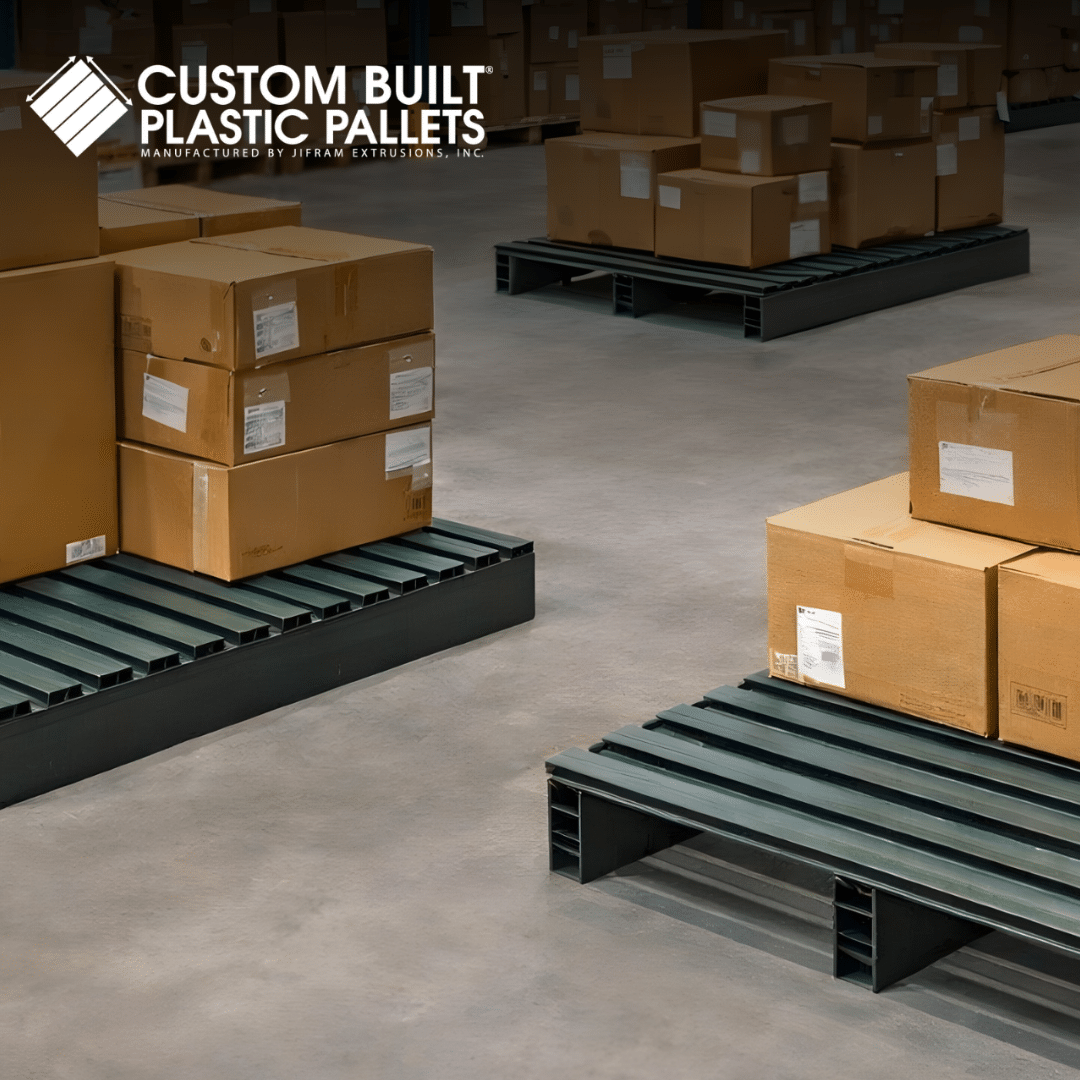
This is the part that rarely gets discussed outside of manufacturing conversations: a pallet’s bed surface, rib spacing, and deck thickness all directly affect how weight transfers down into the forks, the rack beam, or the trailer floor. A heavy duty plastic pallet with the wrong rib geometry for its load class will flex under weight it should easily hold, and that flex is exactly where cracks, product shift, and safety incidents start.
Why Material Choice Is a Quality Decision, Not Just a Cost Decision
A plastic pallet holds its dimensions and weight consistently across every unit, load after load, something wood struggles to guarantee once boards start splitting, nails start backing out, and splinters start showing up in product. For facilities running automated storage, tight rack tolerances, or food-grade and pharmaceutical environments, that consistency is a quality control issue as much as a safety one. A reusable plastic pallet also holds up to washdown and repeated cycling far better than wood, which is why so many manufacturers are shifting toward a plastic storage pallet for closed-loop, in-house material flow.
Sustainability factors in as well. Recycled pallets built from reground PVC give facilities a durable platform without relying on virgin material for every run, and a well-built plastic pallet typically outlasts several generations of wood pallets before it needs replacing, reducing both waste and the ongoing cost of pallet replacement.
The Case for Treating Pallets as Equipment
If you’re ready to buy plastic pallets, the decision is really a manufacturing one: load class, rack compatibility, cycle count, and environment should all drive the spec, not just unit price. That’s the approach Custom Built Plastic Pallets takes with every order and working with you at the design stage to build a pallet to your exact specifications, whether that’s a standard footprint or a fully custom pallet engineered around your specific handling equipment.
Pallets will keep doing their job quietly, right up until the moment they don’t, and that moment is usually the most expensive time to find out they were undersized. Treat the pallet like the structural component it actually is, and the safety, throughput, and product-quality problems it was quietly preventing never become problems at all.
When you’re ready to move forward, Custom Built Plastic Pallets helps you get there with an instant quote or a custom-engineered build.