

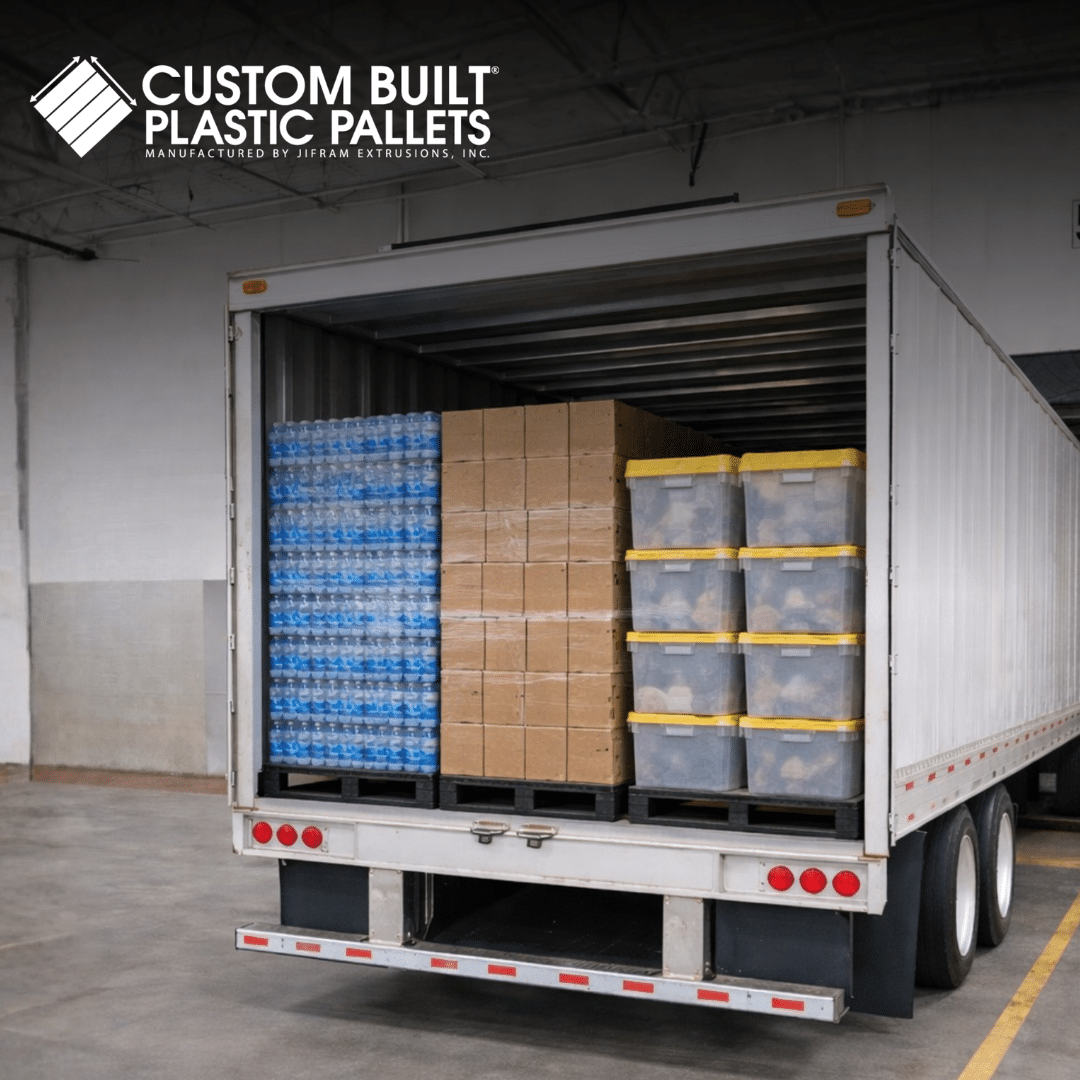
When evaluating a pallet, the purchase price is usually one of the first numbers considered. But the invoice only represents one part of what a pallet actually costs a business.
A pallet that doesn’t properly support a product, work with existing material handling equipment, or make efficient use of warehouse space can create expenses throughout an operation. Damaged products, slower handling, wasted storage capacity, and additional labor can quickly outweigh any savings from choosing a lower-cost platform.
That’s why custom pallets can be more than a material handling solution. When a pallet is engineered around the product and the way it moves through a facility, it can help eliminate inefficiencies before they become ongoing operating costs.
Product Damage Can Start with the Pallet
The pallet is the foundation of the load. If that foundation isn’t properly matched to the product, problems can occur during storage, handling, and transportation.
An undersized platform can leave portions of a load unsupported. A pallet with insufficient structural capacity can experience excessive deflection under load. Poorly positioned supports can also create uneven load distribution.
A properly engineered plastic pallet can be designed around the product’s dimensions, weight, and handling requirements. This can improve load support and stability while reducing the likelihood of damage caused by inadequate pallet design.
The goal isn’t simply to create a stronger pallet. It’s to create a pallet with the right structural characteristics for the application.
Handling Efficiency Adds Up
A pallet also needs to work with the equipment moving it.
If forklift pockets aren’t positioned appropriately or a hand truck can’t easily engage the pallet, operators may need to reposition loads or spend additional time maneuvering equipment. A few extra seconds might seem insignificant, but multiplied across hundreds or thousands of movements, those delays become a meaningful labor expense.
Custom pallets can be designed around the material handling equipment already used in a facility. Forklift entry, pallet jack access, conveyor compatibility, and automated handling requirements can all be considered during development.
For high-volume operations, improving how easily a pallet can be picked up, moved, and positioned can have a direct impact on productivity.
The Wrong Size Can Waste Valuable Space
Not every product fits efficiently on a standard pallet.
A standard pallet size may work well for common loads, but it can create inefficiencies when products have unusual dimensions or require specific support. An oversized pallet can consume unnecessary warehouse or trailer space, while an undersized one may leave product extending beyond the deck. That can improve trailer utilization, warehouse organization, and load stability. In applications where every inch of storage or transportation space matters, optimizing the pallet footprint can create savings throughout the supply chain.
Considering the Full Lifecycle Cost
Upfront price can make a traditional wood pallet appear attractive, but the purchase price doesn’t account for everything that happens after it enters service.
Wood pallets can crack, split, absorb moisture, and require repairs or replacement. Each failure can create additional purchasing, disposal, and labor costs.
A reusable plastic pallet typically represents a larger initial investment, but its durability can provide value over a much longer service life. Plastic pallets are resistant to many of the common sources of deterioration associated with wood and can be reused through repeated handling cycles.
Pallet or Skid? The Application Matters
Choosing the right platform also means understanding whether a pallet or skid is appropriate.
A packaging skid may be appropriate when a product needs a stable base but won’t require frequent movement. Plastic skids can provide a durable alternative for applications where long-term support is more important than repeated transportation.
The difference between skid and pallet ultimately comes down to design and intended use. A pallet is generally designed for repeated movement and handling, while a skid may be better suited to stationary storage or equipment support.
Designing Out Hidden Costs
The best pallet isn’t necessarily the least expensive one on the purchasing order. It’s the one that performs efficiently throughout its service life.
An experienced plastic pallet manufacturer can evaluate load requirements, product dimensions, handling equipment, storage conditions, and transportation needs to determine whether a standard design or custom solution makes sense.
At Custom Built Plastic Pallets, that means approaching each application as an engineering problem rather than simply selecting an existing pallet from a catalog.