

The global logistics and supply chain landscape is evolving rapidly, and plastic pallets are becoming a central part of that transformation. A recent industry report highlights just how significant this shift has become. According to a market analysis published by OpenPR titled “Global Plastic Pallets Market 2026–2034 Driven by the Rising Pharma Demand and Automation Boost,” the worldwide plastic pallet market is expected to grow steadily over the coming decade due to two major factors: increased demand in pharmaceutical supply chains and the continued rise of warehouse automation.
As the article explains, industries that require high levels of cleanliness, durability, and logistical consistency are increasingly moving away from wood pallets and toward pallet plastic solutions. This trend aligns closely with what companies like Custom Built Plastic Pallets® (CBPP) have been seeing across the industries they serve.
Pharmaceutical Demand Is Driving Plastic Pallet Adoption
One of the key insights from the OpenPR article is the growing role that healthcare and pharmaceutical logistics are playing in expanding the plastic pallets market. According to the report, demand from pharmaceutical manufacturers, hospitals, and healthcare facilities is a major driver behind global growth.
Healthcare environments demand strict sanitation standards and reliable storage solutions. As the article notes, plastic pallet solutions are favored because they resist contamination and can be cleaned or disinfected without absorbing moisture.
This is particularly important for healthcare facilities that store medical supplies, archived records, or pharmaceutical inventory. Traditional wooden pallets can absorb liquids, harbor pests, or deteriorate over time—conditions that are unacceptable in regulated medical environments.
CBPP has long provided solutions for these challenges. Their plastic skids are designed to maintain cleanliness and help facilities store materials safely above the floor. Unlike wood, these skids are waterproof and resistant to contamination, making them especially useful in areas where floors are frequently disinfected.
In many healthcare environments, even storage space that was previously unusable can become functional with properly designed skids. Hospitals and clinics can store cartons, files, or supplies safely while maintaining the sanitation standards required in the healthcare sector.
Understanding Skids vs. Pallets in Storage Applications
As the demand for plastic storage solutions grows, many facility managers ask an important question: what are skids and how do they differ from pallets?
The difference between skid and pallet typically comes down to design and intended use. While both are used to elevate materials and allow for material handling equipment access, skids are often used in more stationary storage environments.
In a typical skid vs pallet comparison, pallets are designed primarily for transportation and frequent movement using forklifts or pallet jacks. Skids, on the other hand, can be ideal for static storage situations where stability and floor protection are priorities.
Understanding skids’ meaning and applications can help facilities determine the right solution for their specific needs. For example, a skid pallet may be used to elevate boxes or supplies off the floor in a storage room, while a traditional pallet might be used for shipping or warehouse handling.
CBPP designs both custom pallets and specialized skid solutions to meet a wide range of material handling requirements.
Automation Is Transforming Warehousing
The OpenPR report also highlights another major driver of market growth: automation. According to the article, the expansion of automated warehouses and robotics-driven logistics systems is accelerating the adoption of plastic pallets.
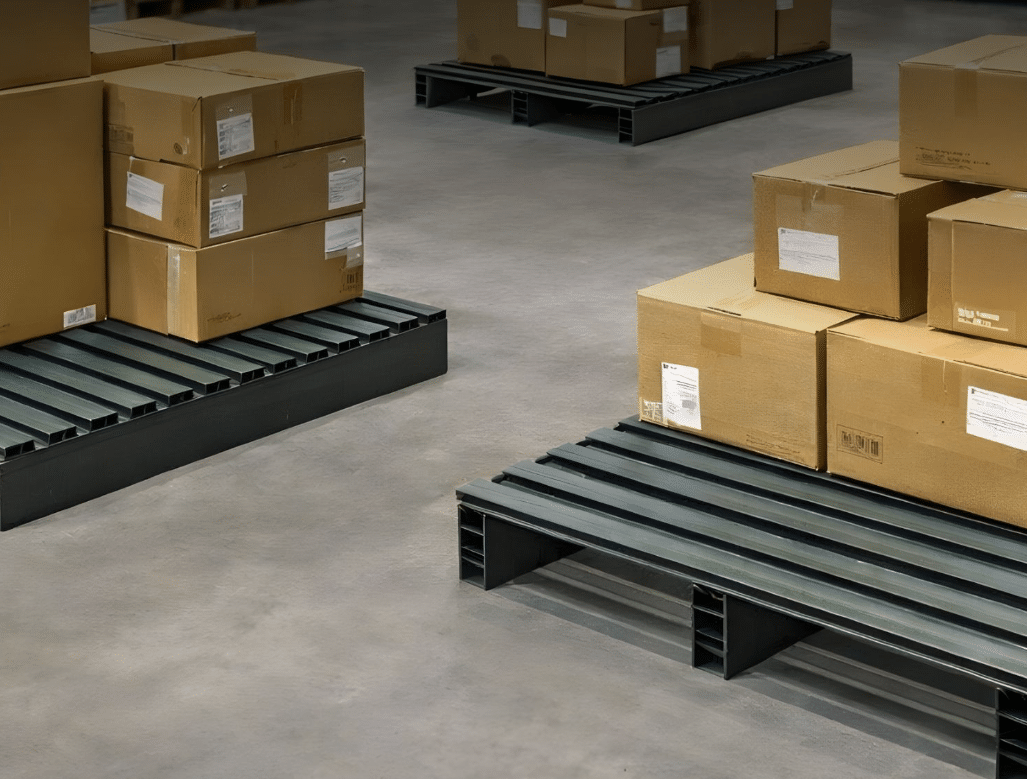
Automation systems rely heavily on consistency and durability. Conveyor systems, automated storage and retrieval systems (AS/RS), and robotic palletizers all require pallets with uniform dimensions and reliable structural strength.
Wood pallets, while historically common, can vary in size, warp over time, or break under heavy use. These inconsistencies can disrupt automated systems and create costly downtime.
By contrast, heavy duty plastic pallets are manufactured with precise dimensions and engineered strength. Their uniform construction makes them ideal for automated logistics environments.
Many automated warehouses also require rackable pallets that can safely support loads when stored on high warehouse racking systems. CBPP designs heavy duty pallet solutions that can be customized to meet these structural requirements while maintaining durability under repeated use.
Plastic Pallets Provide Long-Term Value
Another point highlighted in the OpenPR article is the long-term cost advantage of plastic pallet systems. While the initial purchase price may be higher than wood, the overall return on investment often favors plastic due to their longer lifespan and reduced maintenance needs.
Heavy duty plastic pallets resist damage from moisture, chemicals, and repeated handling. They do not splinter or require frequent replacement, which helps reduce long-term operating costs.
Additionally, plastic pallet solutions simplify international shipping compliance. Because plastic materials are exempt from ISPM-15 regulations, companies exporting products across borders do not need to perform fumigation or heat treatment required for wooden pallets.
This makes packaging skid and pallet systems made from plastic particularly attractive to companies involved in global trade.
Custom Pallets for Unique Applications
Another factor contributing to the growth of the plastic pallet market is customization. Many industries require pallets designed for specific crate sizes, product weights, or transportation environments.
CBPP specializes in designing custom pallets that fit unique packaging or shipping requirements. If a company has invested heavily in a crate system but lacks the correct pallet base to support it, CBPP can design the missing piece of the packaging solution.
These solutions can include specialized skids, reinforced pallet structures, or pallet designs engineered to support unusually large or heavy loads.
As a dedicated custom plastic pallet manufacturer, CBPP works closely with customers and third-party suppliers to ensure the pallet design integrates seamlessly with the overall packaging system.
A Growing Market with Expanding Opportunities
The global growth trends identified in the OpenPR article reflect a broader shift across logistics and supply chain operations. As industries place greater emphasis on sanitation, automation, and long-term durability, plastic pallets are becoming the preferred solution.
Healthcare systems, pharmaceutical distributors, automated warehouses, and global shipping networks are all contributing to increased demand for reliable pallet plastic systems.
For companies looking to buy plastic pallets or explore alternatives to wood, this shift presents an opportunity to invest in solutions designed for modern logistics environments.
With expertise in plastic skids, specialized pallet systems, and rackable pallets, Custom Built Plastic Pallets® continues to support industries adapting to these changes—delivering durable, compliant, and customized solutions for today’s evolving supply chains.